
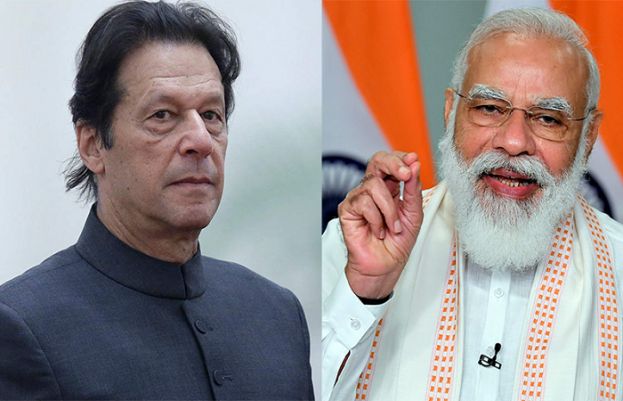
The premier wrote this in a letter to the Indian leader, a week after Modi told Imran in a message that his country, being a neighbour, desired cordial relations with the Pakistani people.
"I thank you for your letter conveying greetings on Pakistan Day. The people of Pakistan commemorate this Day by paying tribute to the wisdom and foresight of our founding fathers in envisioning an independent, sovereign state where they could live in freedom and realise their full potential," Prime Minister Imran wrote in the letter, dated March 29, the Foreign Office confirmed.
"The people of Pakistan also desire peaceful, cooperative relations with all neighbours, including India," he added.
The prime minister said Pakistan was convinced that "durable peace and stability in South Asia is contingent upon resolving all outstanding issues between India and Pakistan, in particular the Jammu & Kashmir dispute".
"Creation of an enabling environment is imperative for a constructive and result-oriented dialogue," Imran emphasised.
In his letter, the premier also conveyed best wishes for the Indian people in the fight against the Covid-19 pandemic.
"Please accept, Excellency, the assurances of my highest consideration," he concluded.
Prime Minister Modi in his letter had stated that "an environment of trust, devoid of terror and hostility" was imperative for friendly relations between the two countries.
The Indian premier had also conveyed wishes to Imran and the Pakistani people for dealing with the challenges of the coronavirus pandemic, terming it a "difficult time for humanity".
The development had come days after Prime Minister Imran said India would have to make the first move to normalise ties with Pakistan.
“We are trying, but India would have to take the first step and unless it does that we cannot move ahead,” the premier said while inaugurating the first edition of the Islamabad Security Dialogue.
The perpetually tense relations between the two countries, which have fought three wars, besides engaging in several episodes of limited conflict, suffered a breakdown after India illegally annexed occupied Jammu and Kashmir on August 5, 2019.
However, the two countries sprung a surprise last month by announcing the resumption of ceasefire at the Line of Control (LoC) after a ‘hotline contact’ between the directors general of military operations of the two countries. Many believe that agreement was made possible through a backchannel, although Pakistani officials strongly deny it.
No violation has since then been reported at the LoC and importantly there has been a visible reduction in rhetoric from both sides.
In his speech at the Islamabad dialogue, Prime Minister Imran said the Kashmir issue was the lone irritant standing in the way of better relations between Pakistan and India.
While addressing the same event, Army Chief Gen Qamar Javed Bajwa too stressed the need to resolve the Kashmir dispute through peaceful means, saying: "We feel it is time to bury the past and move forward."
Comments
Post a Comment