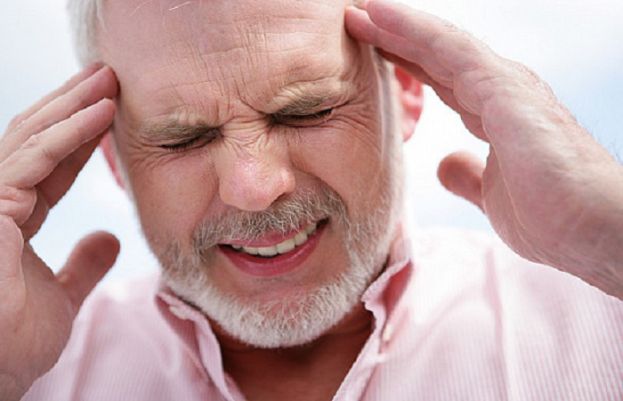
Others occur as a symptom of internal imbalances, such as liver fire, phlegm, blood stagnation, qi deficiency, or blood deficiency. It is especially important to have an accurate diagnosis when treating a headache, since the wrong treatment can actually make the condition worse.
Treating Headaches Caused by External Influences with Traditional Chinese Medicine
When a headache is caused by an external pernicious influence, it can occur suddenly, often along with other symptoms of wind. When it is due to wind cold, the pain is typically in the back or the top of the head. Other symptoms could be an aversion to cold, tight and sore shoulders and neck, and nasal congestion. The classic formula for this pattern is Chuan Xiong Cha Tiao Wan taken along with green tea.
When wind heat is the culprit, the headache can be quite severe. Other symptoms may be fever, sore throat, thirst, and a floating, rapid pulse. In this case, the appropriate formula is Yin Qiao Jie Du Pian or Gan Mao Ling.
When the external pathogen is dampness, the pain is dull and the head feels heavy -- as if it is wrapped in a wet blanket. There can also be fever or chills, nasal congestion, foggy thinking, and fatigue. An effective patent remedy for this type of headache is Huo Xiang Zheng Qi Wan, which is also appropriate for headaches due to internal dampness.
In all the above types of acute, externally contracted headaches, the pain may be due, in part, to pressure in the sinuses. If any nasal or sinus congestion accompanies the headache, it is a good idea to take Bi Yan Pian also.
Treating Headaches Caused by Internal Influences with Traditional Chinese Medicine
A common internal cause of headache is liver yang rising up to the head, which may occur when a person experiences anger or frustration, or it can be a result of long-term deficiency of liver yin. Symptoms are dizziness, irritability, and nausea; the headache is a throbbing pain on the sides of the head or behind the eyes.
The classic formula for this condition is Tian Ma Gou Teng Yin, which is also quite effective in relieving tight neck and shoulders that can accompany the headache. It contains two herbs specific for headaches due to liver imbalances.
In the condition known as liver fire, a condition of extreme heat, the symptoms are the same as for liver yang headaches, with the addition of red face and eyes, more severe anger, and a red tongue with a yellow coat. The standard formula for this pattern is Long Dan Xie Gan Wan, which purges heat from the liver.
Symptoms of blood stagnation headaches are a sharp, fixed, stabbing pain in a specific location, a wiry, choppy pulse, and a purple tongue. Usually, previous traumatic injury caused the blood stagnation. Herbs are selected that move the blood and help to relieve pain, such as Yan Hu Suo Zhi Tong Pian.
A headache due to qi deficiency typically begins or gets worse after physical exertion, and it tends to feel better in the morning or after rest. A dull pain, it can be accompanied by fatigue and a poor appetite. The treatment principle in this case is to tonify qi. Some appropriate patent remedies are Bu Zhong Yi Qi Wan or Shen Qi Da Bu Wan.
If blood deficiency is the cause, the pain is dull but a little more severe than the pain of qi deficiency. A pale face and tongue, dizziness, blurry vision, and a small, thin pulse are typical symptoms. The pain begins or gets worse when the person is hungry or after the menstrual period. The classic formula, Nu Ke Ba Zhen Wan, tonifies qi and blood. Also, Tang Kwei Gin or Shou Wu Chih are effective blood tonics in a convenient, good-tasting liquid form.
Traditional Chinese Medical Treatment Planning for Headaches
In all types of headaches, acupuncture is a powerful tool, frequently relieving the pain within minutes. A point used for all types of headaches is Large Intestine 4 ("Adjoining Valleys"), since it relieves pain in general and is a specific point for conditions affecting the head. Other points are selected according to the location of the pain, such as the back of the head (Gallbladder 20), the temples (Taiyang), or the forehead (Stomach 8).
Following the treatment, it is important to incorporate some lifestyle and dietary modifications to eliminate the underlying cause of the headaches. For example, when the cause is liver heat, spicy and greasy foods should be avoided, and stress reduction should be a high priority.
If the underlying pattern is qi or blood deficiency, the diet should be modified to incorporate more whole grains and beans, nuts, dark greens, and fresh, organic vegetables.
Animal products tonify qi and blood, but they should be eaten in smaller quantities than the other foods.
The protein, fats, and other nutrients they contain make them useful in rebuilding the body in cases of deficiency, but these same qualities make them factors in heart disease and cancer when eaten in excess.
Comments
Post a Comment