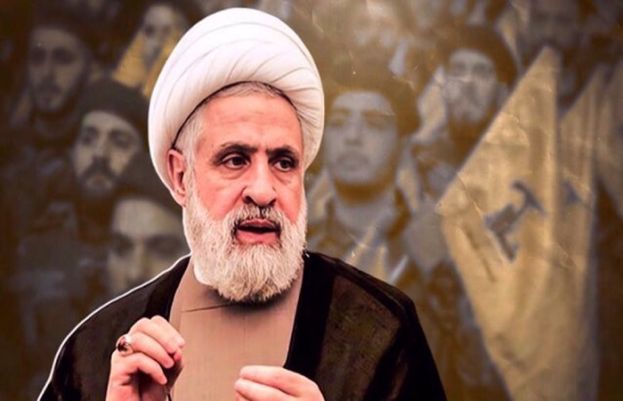
"A ceasefire would not have been achieved without Iran’s position during the Pakistan talks," Sheikh Naim Qassem said in a statement released on Monday.
The Hezbollah chief noted that the Tel Aviv regime is currently at an impasse, and Hezbollah remains staunchly prepared, strong, and invincible.
Earlier this month, negotiations began between Iranian and US delegations in Islamabad on an end to the US-Israeli aggression against the Islamic Republic.
Ever since, Tehran had kept pushing for a ceasefire in Lebanon as a major condition for any progress in the talks and the start of the second round of negotiations.
This finally forced US President Donald Trump and the Tel Aviv regime to comply on this issue.
Israel was trying to continue the war on Lebanon despite the ceasefire in Iran, and the United States was also trying to evade this issue by violating its initial commitment.
Iran once again showed that it stands by its principled positions and that resistance pays off.
"The resistance continues to be strong and cannot be defeated, and the enemy was surprised by the steadfastness of the fighters," the Hezbollah leader said.
He added that his fellow fighters will continue their defensive resistance in defense of Lebanon and its people.
"We will not return to what existed before March 2. We will respond to Israeli aggression and confront it," Sheikh Qassem stressed.
He went on to roundly dismiss the notion of direct negotiations with Israel, emphasizing such talks would neither be in the interest of Lebanese authorities nor the Arab nation at large.
"We categorically reject direct negotiations, and those in power must know that their conduct will neither benefit Lebanon nor benefit themselves," Sheikh Qassem pointed out.
The Hezbollah leader also sharply criticized the Beirut government for making concessions to the occupying Tel Aviv regime, urging officials to abandon the initiative seeking direct talks and instead opt for indirect negotiations.
Sheikh Qassem also underscored that Hezbollah's weapons are tied to deterring Israeli aggression and safeguarding Lebanon's territorial integrity.
He stressed that the Lebanese resistance movement would not disarm.
"The Zionist enemy, with the large-scale support of the United States, sought to pull the plug on Hezbollah, the Islamic resistance front and their popular base by means of the September 2024 onslaught. It employed all means to reach the objective. Yet, it has failed to make such an achievement," the Hezbollah leader stated.
Sheikh Qassem stated that Israel has suffered a humiliating defeat in light of Hezbollah's steadfastness and military prowess, its wide array of combat methods, discreet management of battles with Israeli forces, and unwavering support from all walks of the Lebanese society.
On March 2, Hezbollah launched military operations against the Israeli regime in response to its aggression against Iran, its repeated violations of the 2024 ceasefire, and its continued occupation of Lebanese territory in the country’s south.
Following the Iran-US ceasefire on 8 April, Tel Aviv was compelled to accept a ceasefire in Lebanon as well, after Tehran demanded an end to Israeli attacks on Lebanese soil as one of its primary conditions in indirect negotiations with Washington.
The Israeli military, however, quickly resumed its assaults on southern Lebanon, issuing evacuation threats for several areas even after the initial ten-day truce between Tel Aviv and Beirut was extended for an additional three weeks.
Israeli occupation forces also continue to hold parts of southern Lebanon, where they have imposed a so-called “Yellow Line” — a coercive military buffer resembling the regime’s notorious control measures in the besieged Gaza Strip.
According to Lebanese authorities, nearly 2,500 people have been killed in Lebanon since the Israeli regime launched its renewed offensive following Hezbollah’s 2 March operation.
Comments
Post a Comment