Ayatollah Khamenei thanks Iranians, Iraqis for massive turnout at martyred Leader’s funeral

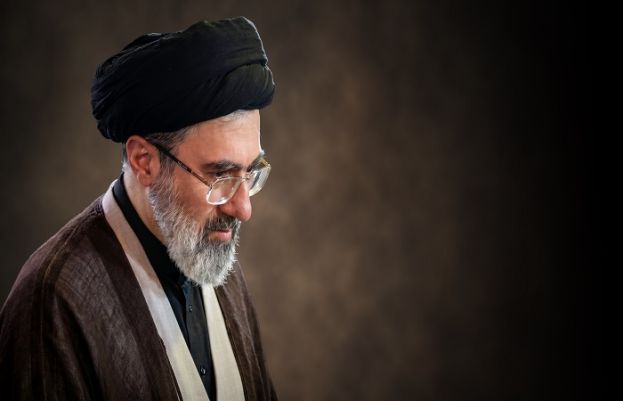
Leader of the Islamic Revolution Ayatollah Seyyed Mojtaba Khamenei
Leader of the Islamic Revolution Ayatollah Seyyed Mojtaba Khamenei has thanked the Iranian and Iraqi people for their massive participation in the funeral and memorial ceremonies of the martyred Leader, Ayatollah Seyyed Ali Khamenei.

The message of gratitude was delivered by Hojjatoleslam Seyyed Mostafa Khamenei, the martyred Leader’s eldest son, during a memorial service in Tehran on Tuesday.

Speaking at the event, Hojjatoleslam Khamenei offered condolences to the Islamic Ummah, the Iranian nation, and Imam Mahdi (AJ), describing the loss as a great tragedy requiring patience.

Quoting the Quranic verse, “Give good news to the patient,” he said patience means enduring the tragedy while steadfastly continuing on the “clear path” until the final goal is achieved.

He stressed that patience “is in no way incompatible with revenge and confronting the world’s evildoers who were involved in these great crimes.”

People in the Iranian capital Tehran gathered at the city’s Mosalla Mosque to attend the commemoration ceremony for the martyred Leader.

The ceremony was hosted by his son and the current Leader of the Islamic Revolution, Ayatollah Seyyed Mojtaba Khamenei.

Top government and military officials, including President Masoud Pezeshkian, as well as foreign ambassadors and diplomats, also participated in the ceremony.

Ayatollah Khamenei’s three other sons attended the ceremony in person.

The ceremony comes five days after the late Leader was laid to rest in the holy shrine of Imam Reza (AS) in his hometown of Mashhad in northeastern Iran.

The burial came after five days of public funerals in Tehran, the central city of Qom, and in Iraq, where millions paid their homage to Ayatollah Khamenei, a respected cleric who was a source of emulation for Muslims around the world.

Ayatollah Khamenei was assassinated along with four members of his family and senior military officials on February 28 in a joint US-Israeli airstrike targeting his office in downtown Tehran.

His martyrdom caused a huge domestic and international uproar and triggered an extensive Iranian military response to US and Israeli targets in the region.

The late Leader had taken office in June 1989 after the founder of the Islamic Revolution, Ayatollah Seyyed Ruhollah Khomeini, passed away following a period of illness.

Comments

Popular posts from this blog

Army chief assures business community of ‘complete support’ for economic uplift

Chief of Army Staff Gen Qamar Javed Bajwa on Wednesday assured the business community of the army’s “complete support” for the economic uplift of the country. He made this assurance during a meeting with businessmen who called on him at the General Headquarters today, according to a statement by the military’s media affairs wing. A delegation of the Federation of Pakistan Chambers of Commerce & Industry (FPCCI) and the army chief discussed the “evolving regional economic environment” as well as the FPCCI’s role in the development of commercial and industrial hubs in Pakistan, the Inter-Services Public Relations (ISPR) said. During the meeting, Gen Bajwa appreciated the role of the business community in the economic uplift of the country and affirmed all-out support of the army in this regard. The delegation, meanwhile, acknowledged the Pakistan Army’s role and sacrifices in the provision of a "secure enabling environment" for economic prosperity in the country, acco...

3rd U-19 Women T20: South Africa beat Pakistan by 52 runs

In the third T20 of the five-match series in Karachi, South Africa Under-19 women's team defeated Pakistan Under-19 women's team by 52 runs tonight. Batting first, South Africa Under-19 women's team scored 158 runs for the loss of six wickets in allotted 20 overs. In reply, Pakistan Under-19 women's team were all out for 106 runs in 18 overs. South Africa lead the series 2-1.

Military court case: SC rejects govt plea for constitution of full court bench

The Supreme Court of Pakistan has rejected a government plea to constitute a full court bench to decide the issue of civilian trials in military courts. The government had urged the court to set up a full court on the question. The was heard by a six-member larger bench headed by Chief Justice Umar Ata Bandial, which reserved its judgment on Tuesday. The bench ruled that judges were not available for the constitution of full court bench due to summer vacations. The bench includes Justice Ijazul Ahsan, Justice Muneeb Akhtar, Justice Yahya Afridi, Justice Mazahar Ali Akbar Naqvi and Justice Ayesha Malik. The Chief Justice of the Supreme Court remarked during the hearing yesterday (on Tuesday) that there should be an independent body to review whether the arrests were made on valid grounds or not. The attorney general of Pakistan submitted the details of 102 people who face military trials to the court. Justice Mazahir Naqvi said in his remarks why other accused in the same case ...