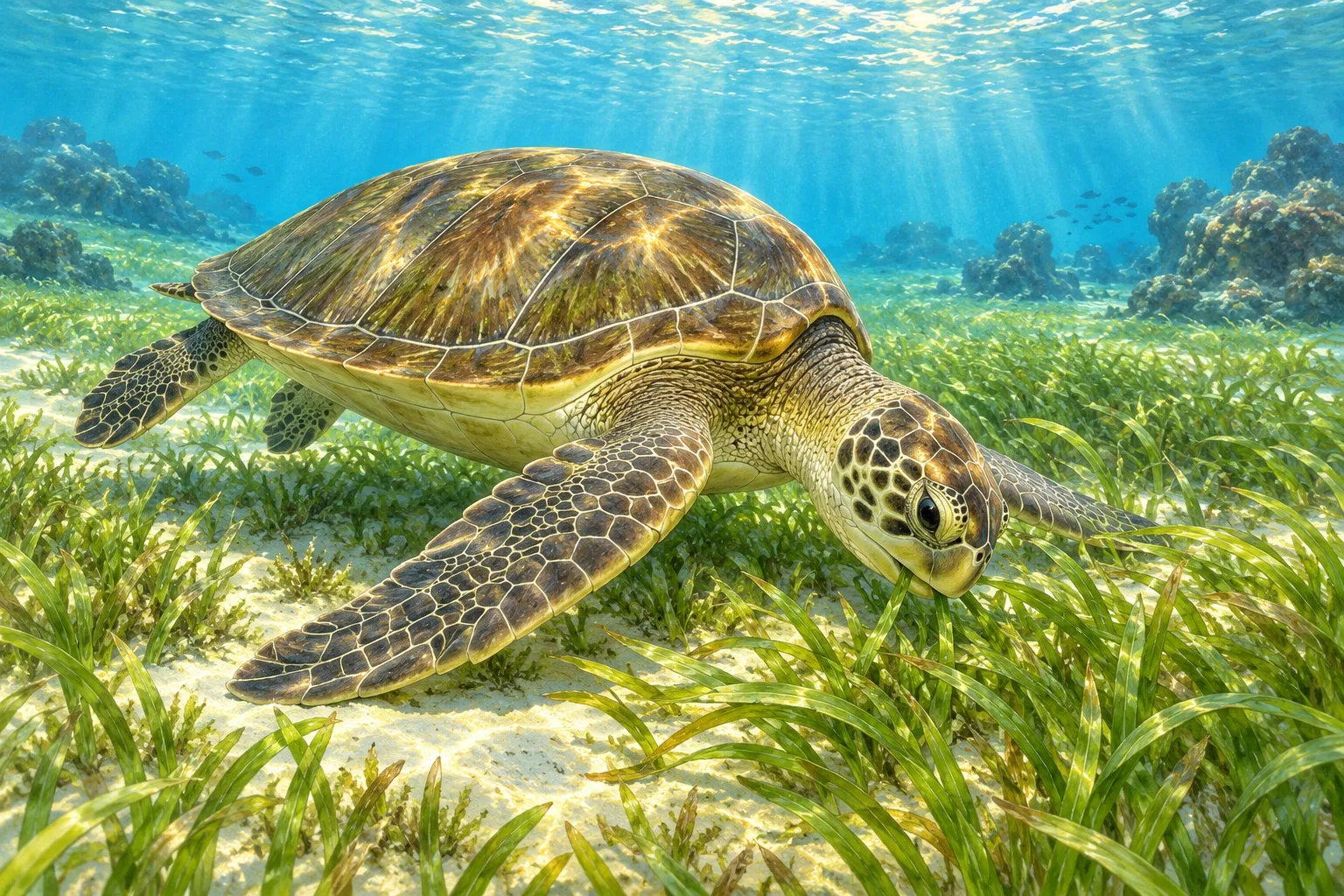
The bowhead whale, Greenland shark, ocean quahog, and immortal jellyfish are some of the animals that live the longest on Earth today. These species can survive for centuries in ocean waters. Some soft corals and glass sponges live for thousands of years without dying of old age.
How Greenland Sharks Reach Four Hundred Years
The Greenland shark lives in the cold waters of the North Atlantic Ocean. It grows very slowly, adding only one centimeter to its body length each year. Scientists measured the age of one large female shark and found she was around 400 years old. These slow sharks do not reach their full adult size until they are 150 years old.
Their bodies stay young because they live in water that is near freezing. The freezing temperature slows down their heart rate and their digestive system. They swim at a steady speed of one mile per hour to save their strength. Eating fish and seals gives them enough energy to survive for centuries in the dark ocean depths.

Animals That Live the Longest in Cold Oceans
Deep ocean water keeps many slow animals safe from harm. The water temperature stays cold and stable all year round. Food can be hard to find, so these creatures use very little energy each day to stay alive. A rich variety of marine biodiversity exists in these deep places, where life moves at a very slow pace.
Here are five ocean animals with extremely long lifespans:
- Ocean Quahog: This hard clam lives in the North Atlantic and can live over 500 years.
- Bowhead Whale: This Arctic whale can live for more than 200 years in freezing water.
- Rougheye Rockfish: This pink fish lives in the Pacific Ocean and reaches 205 years of age.
- Red Sea Urchin: This small spiky creature lives along the North American coast for up to 200 years.
- Glass Sponge: Colonies of these sea animals live for 10,000 years on the ocean floor.
The Two Hundred Year Bowhead Whale
Bowhead whales spend their entire lives in cold Arctic waters near floating ice. They have a layer of fat beneath their skin that is 19 inches thick. This thick fat keeps their body heat stable even during the coldest winter months. Their heavy heads can break through seven inches of sea ice so they can breathe fresh air.
Scientists discovered their true age by studying old stone harpoon tips found inside their blubber. Some of these harpoon tips were made in the late nineteenth century. These heavy whales have strong cells that repair damage quickly, which keeps them free from many diseases as they grow old.
Land Creatures with Exceptional Lifespans
Land animals generally have shorter lives than deep sea animals, but a few land species still reach great ages. Tortoises and giant box turtles have thick protective shells that keep them safe from larger animals. Their low activity levels help them preserve energy during hot summer months. Studying these creatures gives us clear insights into wildlife and natural aging processes.
Here are four land animals known for living for a very long time:
- Seychelles Giant Tortoise: The oldest known land animal lived to be over 190 years old.
- Galapagos Tortoise: These large island reptiles often live past 100 years in the wild.
- Eastern Box Turtle: Small turtles in eastern forests can live for more than 100 years.
- Olilm Proteus Salamander: This blind cave salamander lives in Europe and reaches 100 years of age.
The Biological Trick of the Immortal Jellyfish
The tiny immortal jellyfish measures only four millimeters across. It hatches from a egg, grows into a floating bell shape, and swims through warm seas. When this jellyfish gets sick, starves, or faces physical damage, it drops to the sea floor. It transforms its body back into a tiny mound of tissue called a polyp within three days.
This polyp then grows new clones of the jellyfish over the next few weeks. The jellyfish resets its own age back to zero instead of dying from age or injury. It can repeat this complete cycle over and over again without any limit, making it biologically immune to dying of old age.
Comments
Post a Comment